
Posts Tagged ‘freshly milled’
Why do I mill grains at home? Part #2
If you already read Part One of this tip, then you may or may not have peaked the curiosity of former nay-sayers. You may still need more explanation for why you are thinking of or currently milling at home. After all, inquiring minds want to know.
The second tip to answering the questions of why you bother to mill at home is the benefits of cost and storage. Sure, we can buy ‘whole wheat bread’ at the store. Sure, ‘dead bagged flour’ lasts for a good while. Are these reasons to dismiss home milling all together? Hardly! In fact, look closer and you can see why milling at home is better.
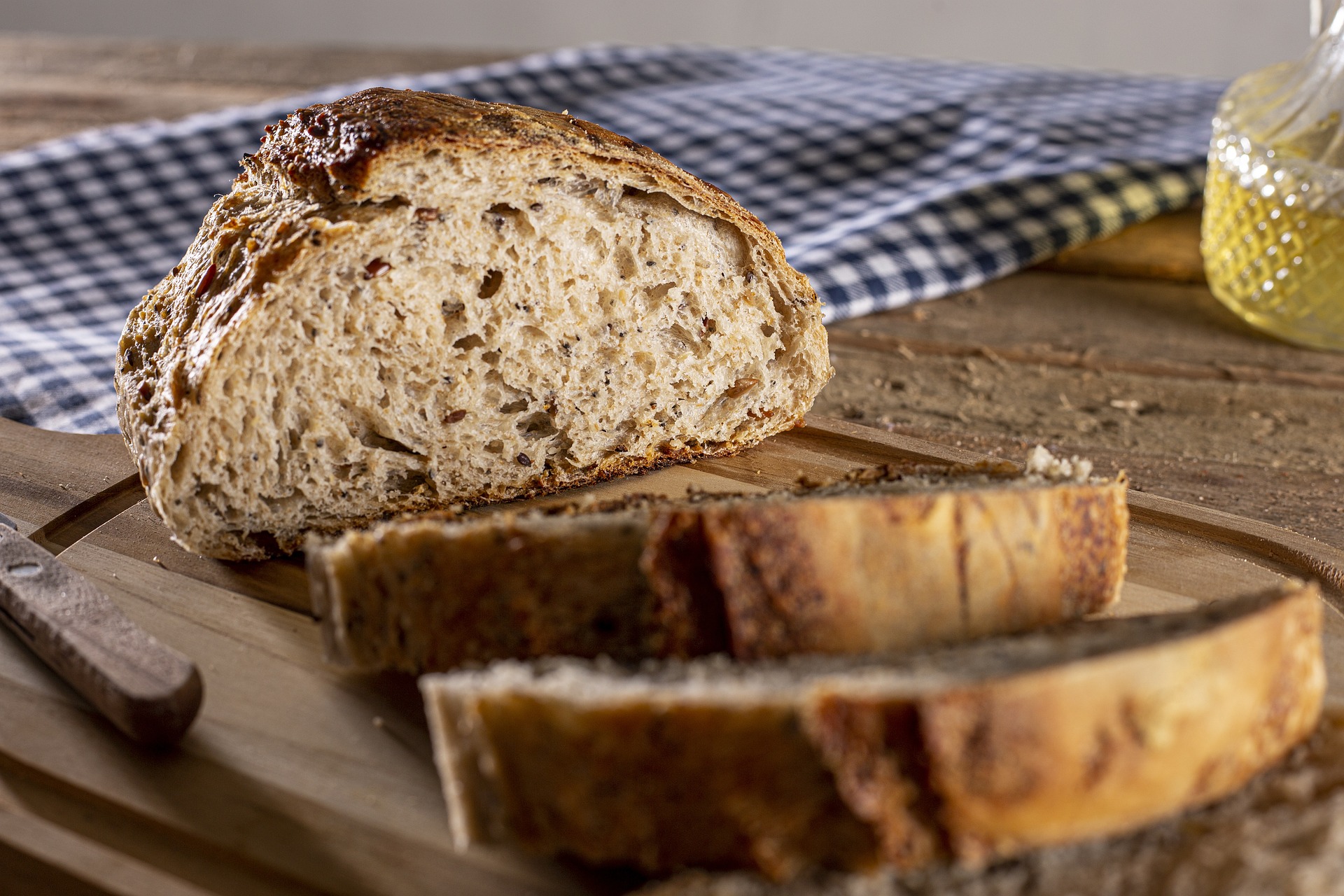
Health benefits aside, which is the MOST important one in my opinion, storage and cost come up on the convenience end of considering milling at home. The ‘whole wheat’ loaf of bread we can buy in the store is not only made of old, processed whole wheat, but by the government regulations only has to be at least 51% – or mostly whole wheat – to be labeled as such. I digress, this is also a health reason. The cost of said loaf is approximately $2.29. A home milled, fresh WHOLE GRAIN flour, loaf of bread costs me about $.75 to make and that is using all organic (a bit pricier) grains and sugar. Also, I know what is exactly in that loaf!
Storage is the other thought. Admittedly, my fresh baked loaf does NOT last as long , not due to shelf-life but that we eat it so fast (no one in the house can resist cutting into a warm loaf when they smell it), but the grains last for years! ‘Dead bagged flour’ can’t say that. Either weevils, mites or simply staleness can render a dead bag of flour useless in mere months. The Creator made a perfect protection for that grain, the husk. There have been grains found in pyramids that were over 4000 years old that when planted, they grew just as they were intended. How’s that for storage. Just keep the grains in a sturdy container and from getting wet and you can store them for years. I don’t think you will be needing them in 4000 years though.
Best Blessings!
Donna Miller
http://www.millersgrainhouse.com/store
TIPS TO REMEMBER WHEN USING FRESHLY GROUND GRAINS: #1
1. Rainy weather will have some effect on your bread rising.

The moisture gets trapped more easily in the wheat or grain that has just been ‘cracked’ by milling. It’s more susceptible to absorbing moisture than dead flour that has sat on a shelf for months. So you may need to slightly adjust the water amount in your recipe or add more gluten to the mix to get the bread to rise. I personally avoid bread on rainy days and focus on tortillas and other flat or quick breads.
EnJOY the journey!
Best Blessings!
Donna
Donna Miller is an author, teacher and entrepreneur. Her favorite roles are that of wife and mother to three home-school graduates. The Millers own and operate Millers Grain House which offers Organic and Chemical-free Whole Grains, Bosch Mixers, the NutriMill, instructional tutorials, recipes and more.
Basic Whole Wheat Bread: More than loaf bread
You can stretch your budget and your menu with the one basic bread recipe that we send out with every newsletter.

Freshly Milled Whole-wheat Hotdog Buns
The Basic "Fool Proof" Bread Recipe we send out second in our newsletter series can be shaped into:
~ Burger Buns
~ Hot Dog Buns
~ Hoagie Buns
~ Bread Sticks (filled and twisted or just plain, warm and toasty)
~ Bread Bowls for Chilli and Soups
~ and SO many more potentials….
Even once made they can become other things if not used up:
~ Croutons (any of the above)
~ Garlic Bread (best for the hot dog/hoagie buns)
~ Toasted Crackers (slice thin [if not split for burger or hot dog] and butter/toast)
~ Open Faced Cheese Bread (Top with mixed cheeses and broil) to go with soups
So even as simple as the ONE recipe may be. Don't get stuck with it ALWAYS just being a loaf of bread! Shape and use it in multiple ways!
Best Blessings!~
Donna Miller
Donna Miller is an author, teacher and entrepreneur. Her favorite roles are that of wife and mother to three home-school graduates. The Millers own and operate Millers Grain House which offers Organic and Chemical-free Whole Grains, Bosch Mixers, the NutriMill, instructional tutorials, recipes and more.
Milling pastry flour at home to eat more whole grains.
A word about the 'pastry flour' from fresh milled grains.
You can mill pastry flour from soft wheat (vs. the hard wheat that make good loaf bread) but it will not be silky smooth like bagged flour because the hulls (aka: bran., fiber) are not separated. You could sift it to get some of them out, but then again that is tedious and may not be necessary. For a texture of a pastry good that we are 'used to' it may be that you would have to use 1/4-1/2 of the flour as bagged organic pastry flour (still missing vital oils and oxidized but does lack chemicals and bleach) and the remaining part as freshly milled (to at least add more nutrients and fiber). Otherwise, the pastry flour straight from the soft wheat as milled is a whole wheat and will be a bit more dense than say a croissant type texture.
The way I look at it, even if 1/2 the recipe is freshly milled soft wheat, then you are getting more nutrients and bran than the usual pastry flour with it's bleach and oxidized nutrients. Also if you go organic vs. regular bagged pastry flour, you are avoiding the chemicals and added synthasized viatmins that your body doesn't recognize anyway.
Happy Milling!
Donna Miller
http://www.millersgrainhouse.com/store