
Archive for the ‘wheat and grain’ Category
Why do I mill grains at home? Part 3
Now that you have tried the previous tips and attempted to reason with friends and family that it is more healthy, and you can make a cheaper/healthier loaf of bread and that the storage life is longer, you may be, like I was, trying to convince yourself that you can DO this (I can, right?).
Here are a few more little tips I have learned to show myself ‘why to bother’:
• It takes no more time than grabbing a bag of dead flour. Throw the grains in the Nutrimill, turn it on and by the time I’ve gathered the other ingredients for the recipe, the mill is done.
• Even the Nutrimill has saved us money! We eat pizza every Friday night. We used to order 3 Large pizzas from Papa Johns, Dominos or Little Caesars. At the tune of between $30-$40 any given Friday. Now I make pizza crusts ahead of time and use fresh ingredients (and I might add less fats/grease) and make 3 16 inch pizzas for $10.00 total! In less than three months, we had paid for the mill on pizza nights alone!
• Last but not least, you don’t have to start our as a purist. If you HAVE to add, change or substitute a pinch here and there to get your family to eat the freshly milled grains that are so packed with nutrients, then just do that until you have experimented enough to use only the grains you mill. Using even 3/4 of a cup of freshly milled wheat vs. the usual ‘dead bagged flour’ gives your family more fiber, E and other phyto nutrients than they can get from fast foods or frozen waffles.
Relax. EnJOY it!
Now not only are you convinced because of these little tips, but your friends and family will see the confidence in you and not worry that you will soon begin brushing your teeth with sugar or go back to believing the world is flat, just because you mill grains at home. Milling grains at home is not old fashioned, it just makes good sense.
Best Blessings!
Donna
http://www.millersgrainhouse.com/store
Why do I mill at home? – Part 1
The Mill I use.![Nutrimill_Grain1_LG-1spd[1] The Mill I use.](http://www.eatgrains.com/wp-content/uploads/2009/12/Nutrimill_Grain1_LG-1spd1-150x150.jpg)
One tip to answering those questions of ‘You do what?’ and ‘Why bother?’ is to know the two biggest benefits of milling at home. First are the health benefits and second are the storage/cost effect benefits. In this tip we will focus on the health reasons.
When grains are processed into flour for shelf storage, most of the grain ‘parts’ are removed to slow the spoilage time. When those things are removed, the flour is stripped of the Wheat Bran, Middlings, Wheat Germ and Wheat Germ oil. As we read that list – we see at least three things that are now sold in health food stores across the world. The Bran and Middlings provide the fiber (and more), the Germ and oil provide the vitamin E (and more), two things missing in the typical diet of the twentieth century.
The additives to ‘dead bagged flour’ can be just as bad or worse than what is missing. To make that white appearance, at first the manufacturers were actually using chlorine bleach! Now a new chemical has been approved., but chemicals are chemicals and not found IN the grain. Since the grain is stripped of so many nutrients in the processing – synthetic vitamins have been added. Personally, since I wouldn’t eat polyester, I also don’t want synthetic vitamins.
This is simply the tip of the health iceberg when it comes to the reason to mill grains at home. The list related to your families health goes on and on. Check out some of our other articles and studies for the healthy reasons to bother with milling at home. At least this is a tip to help you answer those questions when friends and family think you’ve slipped back into the dark ages.
Want more? Watch this vidoe:
Best Blessings!
Donna Miller, Owner of MILLERS GRAIN HOUSE
.
TIP #3: Hard, Soft, Red or White – Easy differences.
Here is a breakdown of wheat types and which recipe to use them:
~ HARD wheat is best for breads and items that require high rising.
~ SOFT wheat is best for pastries and flat breads such as pancakes, tortillas and biscuits.
~ Both types can be mixed equally to make a light texture for all purpose flour.
Color effects the flavor of the flour not the consistancy:
~ REDS will have a more 'nutty' (to me it's almost a bitter) flavor.
~ WHITES are usually just lighter tan or almost golden and have a smoother taste.
~ Both can be mixed equally to make a deliciously light bread without a bitter result.
Muffins, pancakes, cookies and biscuits can all be made from blending types and colors.
Loaf breads have the best result by using a HARD (either color) type only. It contains the most gluten for the rise of yeast bread.
Happy Milling!!
Best Blessings,
Donna Miller, Owner of MILLERS GRAIN HOUSE
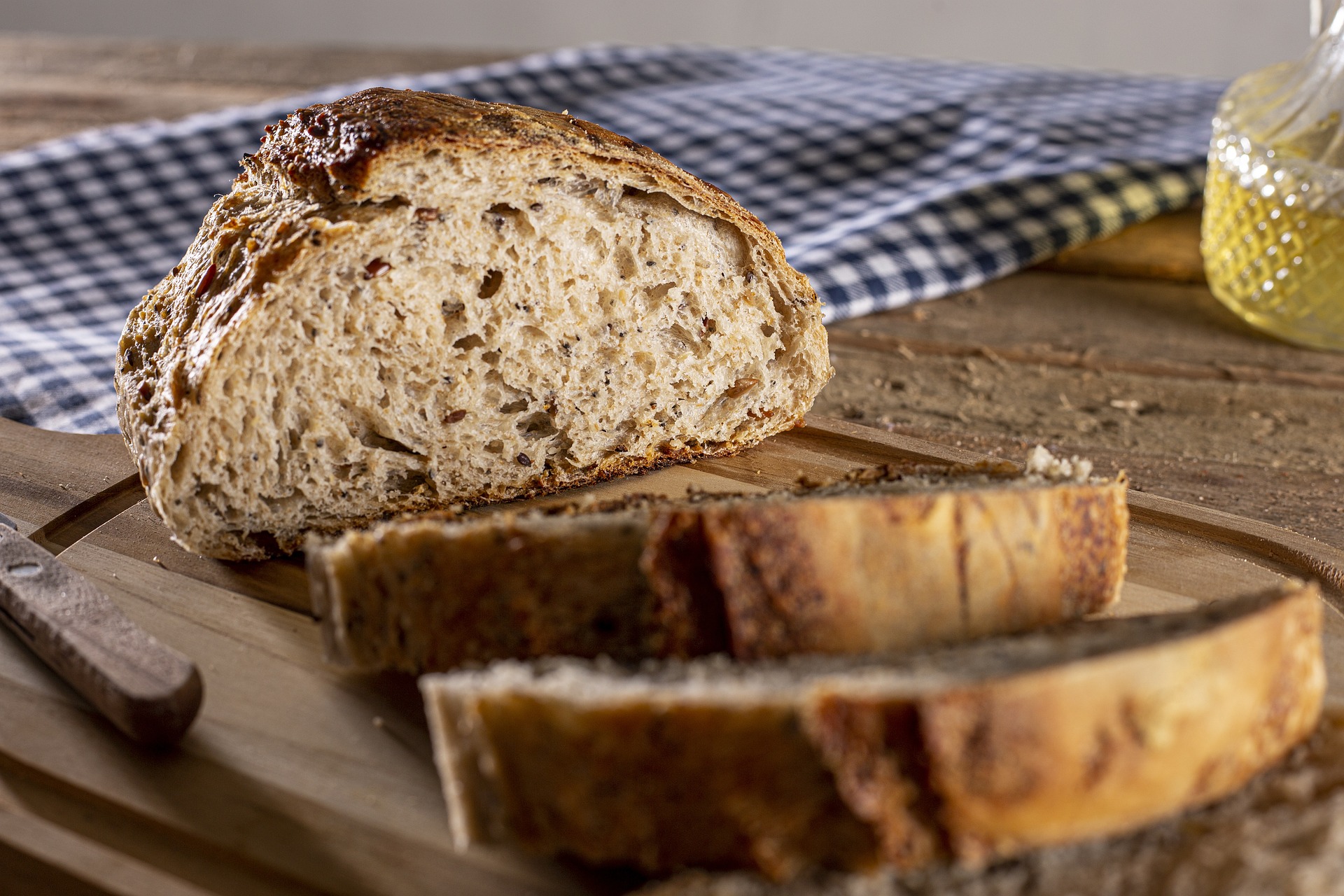
Basic Whole Wheat Bread: More than loaf bread
You can stretch your budget and your menu with the one basic bread recipe that we send out with every newsletter.

Freshly Milled Whole-wheat Hotdog Buns
The Basic "Fool Proof" Bread Recipe we send out second in our newsletter series can be shaped into:
~ Burger Buns
~ Hot Dog Buns
~ Hoagie Buns
~ Bread Sticks (filled and twisted or just plain, warm and toasty)
~ Bread Bowls for Chilli and Soups
~ and SO many more potentials….
Even once made they can become other things if not used up:
~ Croutons (any of the above)
~ Garlic Bread (best for the hot dog/hoagie buns)
~ Toasted Crackers (slice thin [if not split for burger or hot dog] and butter/toast)
~ Open Faced Cheese Bread (Top with mixed cheeses and broil) to go with soups
So even as simple as the ONE recipe may be. Don't get stuck with it ALWAYS just being a loaf of bread! Shape and use it in multiple ways!
Best Blessings!~
Donna Miller
Donna Miller is an author, teacher and entrepreneur. Her favorite roles are that of wife and mother to three home-school graduates. The Millers own and operate Millers Grain House which offers Organic and Chemical-free Whole Grains, Bosch Mixers, the NutriMill, instructional tutorials, recipes and more.
Diagnosis of gluten sensitivity…leads to home milling.

This could be either a really long post or a short and simple one. I'm not sure how it will turn out. What I mean is I could make it long, but the outcome is quite simple so it could be brief. Anyway, here goes nothing…. ?????? ????? ????
Several years ago I was diagnosed with gluten sensitivities and told to omit all gluten and wheat from my diet. Anyone who has had this diagnosis knows a couple of things: 1) the symptoms that brought the diagnosis and 2) the difficulty in giving up foods that contain gluten.
The symptoms range from bloating, intestinal issues, and shortness of breath after eating, headaches, dizziness and foggy thought process. Sometimes the symptoms included are other bowel movement problems (ranging from both extremes) and skin rashes.
The choices? Well…there aren't many…and what there are cost a bundle.
For 3 months, I purchased odd replacements for breads and went without gluten while absolutely killing our grocery budget. The truth is, the foods didn't taste of feel (texture) good and they cost a LOT more than traditional foods that contained gluten. I was growing discouraged…and felt doomed to a life of restriction. ?????? ????? ????
Then I decided that to broaden my choices, I'd make things at home. After finding that most of the 'fours' I needed were either not available or were also too high in price, I decided to try milling at home to have access to the rice and bean flours needed. Some recipes were….okay….others….downright gross……but…..I gained one really amazing bit of relief!
I decided to mill my own wheat flour. I figured after several months of doing without, it was worth a try again. Much to my surprise, with my home milled, organic flour and only 4 more simple organic ingredients, I could eat bread with NO symptoms. NONE.
This leads me to my belief that it is not the gluten that is my problem. The problem is the PROCESSING of the wheat. The stripping of the flour or adding of synthesized ‘enrichments’ or the additives to the pre-baked bread or all three were what aggravate my insides.
To this day, years later, I can eat my OWN minimal ingredient home-milled bread with no problems, but have instant issues if I eat bread bought at the store or from a restaurant. This is just one of the reasons I keep home-milling.
My diagnosis of gluten sensitivity was key in leading me to eat healthier wheat!
Best Blessings!
Donna Miller
Donna Miller is an author, teacher and entrepreneur. Her favorite roles are that of wife and mother to three home-school graduates. The Millers own and operate Millers Grain House which offers Organic and Chemical-free Whole Grains, Bosch Mixers, the NutriMill, instructional tutorials, recipes and more.
.